

Sales teams rarely question how much time goes into building presentations. A discovery call ends, a demo is scheduled, and the next step is almost automatic: open PowerPoint, search through old decks, copy a few slides, rewrite the messaging, adjust the formatting, and repeat.
It feels like part of the job. But every hour spent on sales deck creation is an hour not spent prospecting, following up with buyers, or moving deals forward. Reps are facing a loss of productivity and revenue.
The problem is that most organizations treat sales deck creation as a design task when it's really an operational challenge. The teams moving fastest today are building better systems for creating them, not building from scratch.
Repetition can be easily systemized
Ask a salesperson where presentation time goes, and the answer is rarely "design." It's everything leading up to it.
The process usually looks something like this:
- Search through old presentations for reusable content
- Rewrite messaging to match the prospect
- Update customer examples and proof points
- Reformat slides so the deck feels consistent
- Repeat the process for the next opportunity
Sound familiar? Most of these presentations contain the same building blocks. Yet many teams recreate the majority of that content for every new opportunity. That's time spent recreating work instead of advancing deals. The good news is that this repetition also reveals the solution. If most sales presentations share the same foundation, they don't need to be rebuilt every time. With a systematic process or tool, assembly can be easy.
Traditional deck creation detracts from deal velocity
The cost of ineffective presentations can’t simply be measured in hours. It goes beyond that. The missed opportunities are the biggest loss. Time wasted doesn’t mean much if you’re not closing deals.
When reps spend half a day building a deck, follow-up emails get delayed. Buyers lose momentum between meetings. Messaging becomes inconsistent because every salesperson is editing their own version of the story. Instead of selling, your team is formatting slides.
These small delays compound across the sales cycle. A slower response after a discovery call can weaken buyer engagement. Different versions of the same presentation create confusion across prospects. Valuable selling time disappears into repetitive administrative work.
That's why improving presentation efficiency isn't simply about helping salespeople work faster. It's about increasing deal velocity. The faster your team can move from conversation to customized presentation, the faster opportunities continue moving through the pipeline.
AI needs systems to go from speed to scale
AI has already made presentation creation dramatically faster. Today's tools can summarize discovery calls, draft messaging, rewrite value propositions, and generate first-pass content for AI sales presentations in minutes instead of hours. These capabilities are valuable, but only solve part of the problem.
Without a standardized sales presentation workflow, every salesperson still manages research and deck creation in different ways. AI accelerates these individual tasks, but the inconsistency remains.
High-performing sales organizations approach the problem differently. Instead of relying on AI alone, they combine it with modular slide libraries and repeatable workflows. AI generates and personalizes content, while the underlying system ensures every presentation stays aligned with the company's positioning and brand.
The workflow shifts from building, editing, and rebuilding to assembly, customization, and refinement. AI helps you take your current process, and not replace it, but strengthen it.
Develop a system that everyone can use
The best sales organizations optimize their system for sales deck creation. Beautiful.ai recommends the following, scalable workflow to implement AI deck creation in your team:
- Capture customer insights. Pull key information directly from call notes, CRM records, and discovery conversations.
- Generate a structured narrative. Use AI to organize those insights into a logical story instead of starting with a blank slide.
- Assemble from pre-built modules. Combine approved messaging, proof points, customer stories, and sales deck templates rather than rebuilding core content.
- Customize for the opportunity. Tailor examples, objections, and recommendations to the specific buyer and/or industry while keeping the core narrative consistent.
- Refine and deliver quickly. Make final adjustments, share the deck, and move the conversation forward while the meeting is still fresh.
Once this process is established, it can scale across the entire sales organization. Messaging becomes more consistent and every presentation starts from the same source of truth, rather than someone's desktop folder.
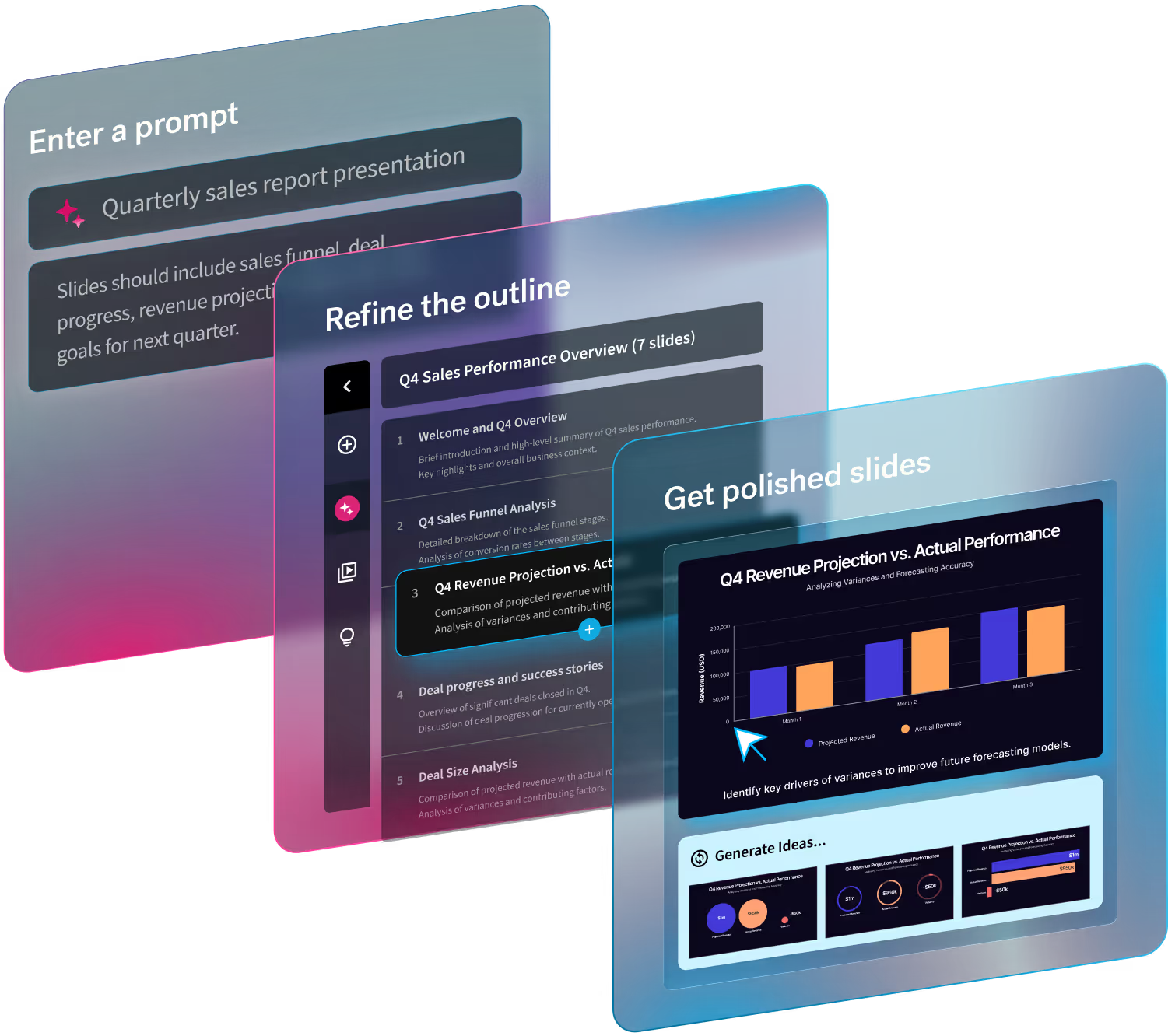
Beautiful.ai is built to support scalable, professional sales deck workflows, using a mix of AI and design guardrails to build and refine presentations. AI-assisted content generation, shared slide libraries, and intelligent design automation help teams spend less time formatting and more time selling.
When decks don’t take forever, you can close more deals
When presentation creation becomes operational instead of manual, the results extend far beyond prettier slides. Sales teams respond to prospects faster, messaging stays consistent across every conversation, reps can spend more time building relationships. In Beautiful.ai, sales enablement teams can update messaging once instead of chasing dozens of different deck versions.
But just as importantly, the process becomes predictable. Don’t let the ease that AI can provide lull you or your team into a false sense of productivity. Proper, efficient AI use for teams should be a repeatable workflow, not one-time shortcuts. For sales deck creation, implementing AI doesn’t mean much if it doesn’t enable sharing and collaboration. Find a tool with a centralized slide library, so reps can easily pull repeatable information into their decks.
Decks don’t need to be over-customized. They should speak to the buyers specific needs and pain points, but you don’t have to stalk their social profiles to add extra detail to a deck. The same goes for tailoring visual perfection. Decks are a visual aid for your story, don’t let the design detract from the message.
The strongest sales enablement process isn't the one that produces the flashiest presentations. It's the one that helps every salesperson deliver the right story, at the right time, with the least amount of friction. Sales presentations are always going to be a part of the job. But rebuilding them from scratch doesn't have to be.
High-performing teams use modern tools
The teams pulling ahead today aren't winning because they have better designers. They're winning because they've built systems that let their salespeople spend more time selling and less time making slides.
If you're ready to modernize your sales presentation workflow, Beautiful.ai helps teams combine AI-assisted creation, reusable content libraries, and intelligent slide design into a faster, more scalable way to build presentations, without sacrificing personalization. Try it today, free for 14 days.

.avif)