
.gif)
.gif)

For years, presentations have relied on familiar chart types—bar graphs, pie charts, and dense dashboards packed with data points—to help convey important information. And while these formats were once effective, modern audiences have changed, attention spans have shrunk, and the standard for good design has shifted.
Today’s viewers are overwhelmed with information. They scan instead of read, expect immediate clarity, and have little patience for deciphering complex visuals. Because of this, traditional charts often fail. They tend to prioritize completeness over clarity, require too much cognitive effort to interpret, lack context or narrative direction, and feel static in a world that expects interactivity and adaptability.
In short, traditional charts were designed to display data—not to communicate it. And in 2026, the story behind the numbers is what matters most.
Key data visualization trends for 2026
So what can you expect to see for data visualization in 2026 and beyond? Below are key trends that help package up your data in a more engaging and digestible way.
1. Clarity-first charts
The most important shift is toward simplicity. Instead of showing everything, modern data visualizations focus on showing the right thing.
Design choices are intentional: fewer data points, stronger hierarchy, and clear labeling. Visuals are stripped down to highlight a single takeaway rather than overwhelm the audience with options.
2. AI-generated visuals
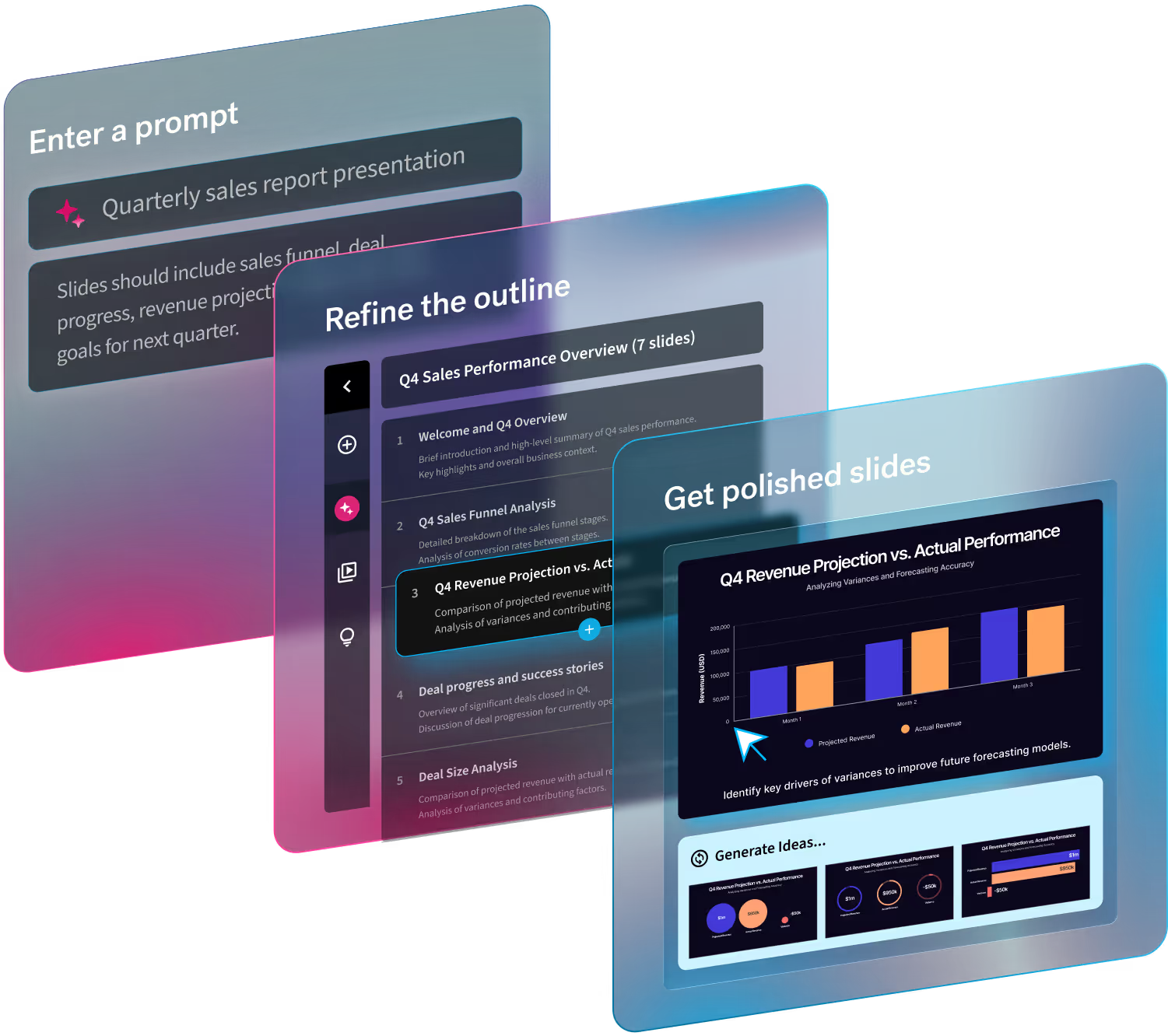
AI is transforming how charts are created. Instead of manually selecting chart types and formatting elements, presenters can now describe what they want to communicate—and AI generates the optimal visualization.
These tools:
- Recommend the best chart type for the data
- Automatically highlight key insights
- Adapt visuals for different audiences
- Ensure consistency across presentations
The result is faster creation and significantly improved clarity.
3. Narrative-driven data
Data is no longer presented in isolation. In 2026, every chart is part of a story. Effective presentations guide audiences through a logical sequence of what’s happening, why it matters, and next steps.
Modern data visualizations are designed to support this narrative, often emphasizing change, contrast, or impact rather than raw numbers.
4. Executive-friendly summaries
Decision-makers don’t have time to interpret complex charts. They need instant understanding. Charts and graphs in 2026 will prioritize headline insights directly on the slide, clear “so what” messaging, and minimal visual noise.
Charts are no longer the focal point—the insight is. Stakeholders can leverage AI here to help pull key insights from data sets and tell a clearer story to the audience.
5. Adaptive and context-aware design
Presentations are increasingly dynamic. Visuals can adjust based on audience type, presentation format, or level of detail required. For example, a high-level summary for executives can expand into deeper analysis for technical teams—without rebuilding the slide from scratch.
How AI is changing data visualization in presentations
AI is not just speeding up design, it’s fundamentally reshaping how we think about data communication. Instead of focusing on the charts, presenters can hone in on important insights that drive their business decisions forward.
AI helps bridge the gap between raw data and clear communication by translating data into plain-language insights, automatically structuring visual hierarchies, identifying trends, anomalies, and comparisons, and reducing human bias in chart selection.
This shift allows teams to focus less on formatting and more on strategy, storytelling, and decision-making.
Practical tips to apply these trends today
Data can often be the difference between a “yes” and a “no” in business. Here are 6 actionable steps to applying these design principles in your next presentation.
Focus on one insight per slide
Avoid combining multiple messages into a single chart. If your audience needs more than a few seconds to understand it, simplify.
Use titles that explain the data
Replace generic titles like “Q2 Revenue” with insight-driven headlines like “Q2 Revenue Exceeded Targets by 18%.”
Remove unnecessary elements
Gridlines, legends, and excessive labels often add noise. Keep only what supports understanding.
Highlight what matters
Use contrast, color, or annotations to direct attention to the most important data point.
Leverage AI tools
Adopt AI tools like Beautiful.ai that assist with chart selection, layout, and storytelling. These can dramatically improve both speed and quality.
Why Smart Design Systems Outperform Manual Chart Creation
Manual chart creation is time-consuming and inconsistent. Even experienced designers struggle to maintain clarity across multiple slides and presentations.
Smart design systems—especially those powered by AI—solve this by embedding best practices directly into the creation process.
AI presentation makers like Beautiful.ai can help
- Enforce visual consistency
- Automatically apply hierarchy and spacing
- Optimize readability and accessibility
- Scale effortlessly across teams
Rather than relying on individual skill, design systems ensure that every chart meets a high standard of clarity and effectiveness. In 2026, the most effective data visualizations won’t be the most complex or visually impressive—they’ll be the easiest to understand and take action.





.avif)
