
.avif)
.avif)

AI presentation trends in 2026 are no longer defined by how quickly slides can be generated. Instead, the focus has shifted to how effectively those slides communicate. After the initial surge of generative AI presentations—where speed and novelty dominated—the market is maturing. Teams are no longer impressed by instant decks alone. They’re asking a more important question: does this help us communicate better?
The future of presentations is not about automation for its own sake. It’s about clarity, consistency, and confidence. As AI presentation tools evolve, the strongest trends are centered on improving real business outcomes — better alignment, stronger storytelling, and more persuasive communication. Here’s what’s shaping 2026.
1. AI that understands intent, not just prompts
The first wave of AI presentation tools responded to simple instructions: “Create a pitch deck about X.” While impressive, those systems often lacked context. They produced slides, but not necessarily meaningful content. And there’s a big difference between the two.
In 2026, the biggest shift is toward intent-aware AI. Modern systems increasingly account for audience, goal, format, and constraints before generating or refining content. A board update requires a different tone and structure than a sales pitch. A 10-minute presentation demands sharper prioritization than a 45-minute keynote. AI is beginning to recognize those differences.
This matters because presentations are situational. When AI understands purpose—whether to inform, persuade, align, or secure funding—it can shape messaging and structure accordingly. The result isn’t just faster slide creation; it’s more relevant communication.
2. Design systems embedded in AI
Another defining presentation design trend in 2026 is the integration of design systems directly into AI tools. Historically, even strong content could be undermined by inconsistent formatting, cluttered layouts, or off-brand visuals. Generative AI initially made this worse by producing slides without design guardrails.
Now, the shift is toward AI that enforces brand, layout, and hierarchy rules automatically. Smart systems embed spacing logic, typography standards, and visual hierarchy directly into the creation process. Instead of generating something that needs heavy cleanup, the AI works within structured design constraints from the start.
For businesses, this is transformative. Brand consistency improves. Review cycles shrink. Teams no longer depend on designers to fix avoidable formatting issues.
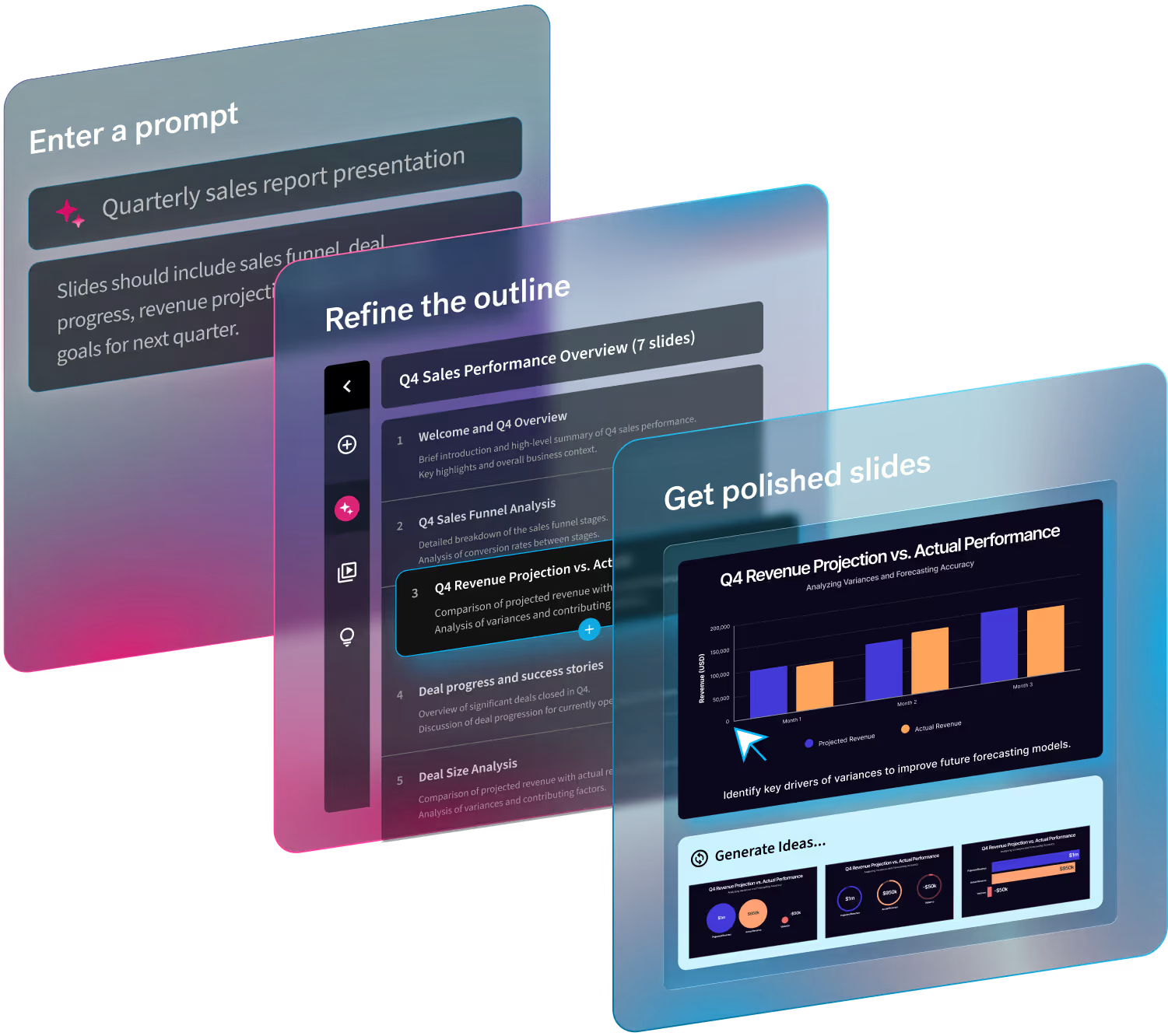
Beautiful.ai makes this seamless with our Smart Slide technology. Each presentation generated with AI is automatically built with Smart Slide layouts, which means formatting and design automatically adjust as you add or edit content. This feature makes it incredibly easy to generate with AI, then quickly iterate to get to a finished deck faster.
3. From static slides to adaptive presentations
Presentations have traditionally been static documents—built once, delivered once, and then duplicated or rebuilt for the next audience. In 2026, that model is fading.
AI presentation tools are enabling adaptive presentations that adjust based on context. A single core deck can now be condensed for a short executive briefing, expanded for a workshop, or tailored with different examples depending on the audience. Instead of recreating content from scratch, teams refine and reshape it dynamically.
This represents a meaningful evolution in the future of presentations. Decks are becoming living assets rather than one-off files. Reusability, flexibility, and structured content systems are becoming more valuable than sheer output speed.
4. Real-time collaboration between humans and AI
Early generative AI presentations often promised one-click results. But effective communication rarely happens in a single draft.
In 2026, AI is increasingly positioned as a collaborator rather than a one-time generator. Instead of producing a finished deck and stepping aside, the AI participates throughout the refinement process—suggesting clearer headlines, tightening copy, reorganizing flow, or recommending stronger visual emphasis.
This continuous interaction reflects a more realistic workflow. Great presentations are edited, shaped, and sharpened. AI now supports that iteration in real time, helping teams move from rough draft to polished narrative more efficiently without removing human judgment.
5. Quality signals over quantity
During the early boom of generative AI presentations, more often meant more. More slides. More text. More sections. The result was often cognitive overload.
In 2026, the emphasis is shifting toward clarity. AI systems are increasingly optimized to reduce noise rather than expand it. They prioritize concise messaging, stronger headlines, logical sequencing, and cleaner slide composition. The goal is not maximum output, it’s maximum understanding.
This shift aligns AI in business presentations more closely with communication science. Audiences retain information when it is structured and focused. Fewer slides with sharper insights consistently outperform longer, cluttered decks. Quality is becoming the core metric.
6. AI-driven storytelling and narrative flow
Perhaps the most important of the AI presentation trends in 2026 is the move toward structure-first creation. Strong presentations follow narrative logic—establishing context, defining a problem, presenting insight, offering a solution, and ending with a clear call to action.
Rather than generating disconnected slides, advanced AI presentation tools increasingly guide users through storytelling frameworks. They recommend sequencing, strengthen transitions, and reinforce pacing. This ensures that presentations unfold logically instead of feeling assembled.
When AI supports narrative flow, the impact is significant. Audiences follow the argument more easily. Key messages land more clearly. Persuasion becomes intentional rather than accidental.
Durable shifts vs. novelty features
Not every AI capability introduced in the past few years will define the future of presentations. The durable shifts are those that improve communication outcomes: intent awareness, embedded design systems, adaptive reuse, collaborative refinement, clarity optimization, and narrative support.
Novelty features—such as one-click bulk generation without context—may remain useful in specific scenarios. But they don’t fundamentally improve how ideas are understood. The market is increasingly distinguishing between tools that create slides and tools that strengthen communication.
The best AI presentation tools in 2026 won’t just save time. They will help teams communicate with confidence, consistency, and clarity.
The future of presentations belongs to platforms that embed design discipline, storytelling intelligence, and collaborative refinement directly into the creation process. As AI continues to mature, success will be measured less by how quickly slides appear, and more by how effectively ideas land.





.gif)
